
How big of a hole can you patch in drywall?
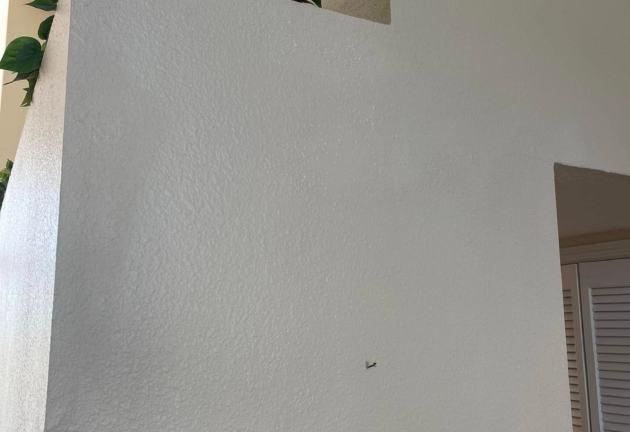
You can patch a hole of almost any size, but the method changes: small nail or anchor holes, under about half an inch, can be filled with spackle, then sanded, primed, and painted. Doorknob-size holes, up to about six inches, need a mesh patch and thin coats of joint compound, not one thick blob of spackle. Bigger than that, cut the opening square, put a backer in, and install a new piece of drywall, then tape and mud.
This is where a lot of weekend patches go wrong. People treat a fist-sized hole like a nail hole, smear on a blob of spackle, and wonder why it sinks, cracks, and shows every time the light hits it. Spackle is the right filler for a small hole. It is the wrong filler once the hole is big enough that there’s nothing behind the paste but air.
A nail hole or a small anchor scar is the easy one. Push lightweight spackle in, scrape it flush, and leave it alone until it’s fully dry. In our humidity, that can take longer than the can suggests, especially in a closed bedroom with the AC set high or after a rainy week. Rushing to paint is how you get a little crater that announces itself later. Sand lightly, wipe the dust, prime the spot, then paint. Primer matters. Paint alone often leaves a dull or shiny patch.
A doorknob-sized hole, the classic mark behind a swinging door, is too big to just fill. A self-adhesive mesh patch works if you cover it with thin coats of joint compound, feathered out well past the mesh, with drying time and a light sanding between coats. One thick coat looks fine when it’s wet and shows a bump when it dries. If you keep bumping the same door into the same wall, put a door stop in while you’re at it, or you’ll be patching it again after the next hurried exit.
Once the hole is larger than that, skip the mesh-and-hope approach. Cut the damaged area back to a clean square or rectangle, give the new piece of drywall something to screw into, tape the seams, and build up compound in thin layers. Before you cut, think about what’s in the wall. Outlets and switches usually mean a wire is nearby, often running along a stud. Don’t go fishing around with a drywall saw if you’re guessing.
The part that makes a patch disappear, or fail to, around here is texture. A lot of walls in Orange, Seminole, and Volusia County homes have knockdown or light orange peel. A perfectly smooth patch on a textured wall is as obvious as the hole was. Matching that texture takes practice, and so does matching older paint that has yellowed a bit in the sun. If you still have the original paint in the garage, that’s a gift. If you don’t, you may be looking at painting the whole wall so the new work doesn’t stand out.
One more caution, and it doesn’t matter how big the hole is. If the drywall is brown, crumbling, or soft, or if the same spot keeps bubbling, you don’t have a drywall problem first. You have water. That might be a window leak, a bathroom on the other side of the wall, or something in the roof or attic. Patching over it is a short-term disguise.
If the hole is large, the texture has you stuck, or you’d rather not spend two evenings sanding, book a $49 in-person consult on our Contact page. We’ll look at the wall, give you a straight quote, and credit the $49 toward the work if you book it within 30 days of that visit. Please give us at least 24 hours’ notice. For ongoing help with the little repairs that add up, see our Home Care membership.
Book a $49 in-person consult
The $49 in-person consult is credited toward the quote from that visit only if you hire us for that work. The credit expires in 30 days. Every booking needs at least 24 hours' notice.
Office hours Monday–Friday, 8:00 a.m.–5:00 p.m..