
What should I check around my house after a heavy rain in Florida?
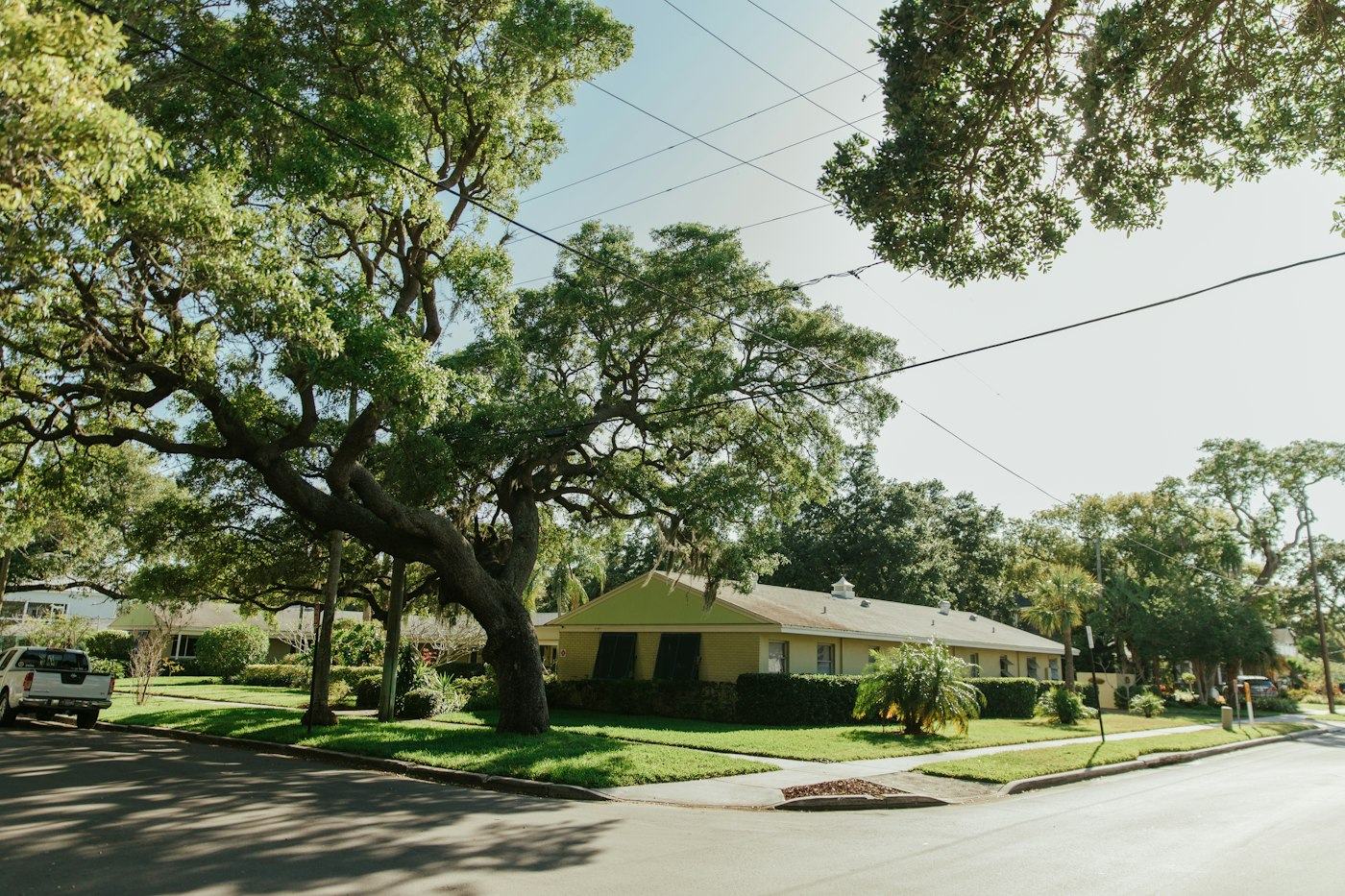
Once the storm passes, walk the house and look for water on window sills, around exterior doors, on ceilings, and along baseboards. Outside, see whether gutters overflowed and whether the caulk around windows and doors looks cracked or pulled away. Finding a small leak after one downpour is a lot easier than finding soft wood or stained drywall months later.
This is not the big end-of-hurricane-season walk-around, when you’re looking at fences, fascia, and everything the last six months may have loosened. This is the shorter version: the sky just dumped an inch of rain in twenty minutes, the streets in your subdivision ran like creeks, and you want to know if any of it came inside.
Start indoors while surfaces are still telling the truth. Check the sills and lower corners of windows, especially on the side of the house that took the wind. Look at the ceiling under an upstairs bathroom or under the attic access, and at the top corners of windows on a two-story wall. Run a hand along the base of exterior door frames and the trim around sliders out to the lanai. You’re hunting for dark spots, peeling paint, a little grit of wet drywall, or a musty smell that wasn’t there this morning. A single damp mark is useful information. Wipe it, take a photo, and note which way the wind was blowing. If it happens again in the next storm, you have a pattern instead of a maybe.
Then go outside, after the lightning has moved on. Look at the gutters. Our live oaks drop leaves on their own schedule, and a gutter packed with wet oak leaves will overflow right down the fascia and onto the foundation. Follow that water with your eyes. Did it spill behind the gutter, sheet down a wall, or puddle next to the slab? Look at the caulk around window frames and door trim. After a hard rain, failed caulk is easier to spot because it’s still wet or because you can see a gap where the bead pulled loose. On houses where a lower roof meets a wall, glance at the flashing along that joint. Bent, lifted, or stained metal up there is a reason to call a roofer, not to recaulk the window below and hope.
While you’re out there, press gently on any trim or stucco that looks stained at ground level, and check that downspouts are still attached and pointed away from the house. A loose downspout after a storm is a small fix. A washed-out bed against the slab is how water starts looking for a way in.
If you find a wet sill and the caulk is obviously shot, that’s often a handyman repair, once the area can dry. If the stain started above the window or along the roofline, call a roofer. If a ceiling or wall is wet and it hasn’t been raining, or it gets worse when someone uses a shower, call a plumber. We don’t do plumbing or roof work, and we’ll say so if that’s what you’re looking at.
If you’d like someone to walk the house with you after a storm, or you already have a few spots to show, book a $49 in-person consult through the job-request form on our Contact page. The $49 is credited toward the project quote from that visit if you book the work within 30 days. We need at least 24 hours’ notice. For regular visits that catch this kind of thing earlier, see our Home Care membership.
Book a $49 in-person consult
The $49 in-person consult is credited toward the quote from that visit only if you hire us for that work. The credit expires in 30 days. Every booking needs at least 24 hours' notice.
Office hours Monday–Friday, 8:00 a.m.–5:00 p.m..